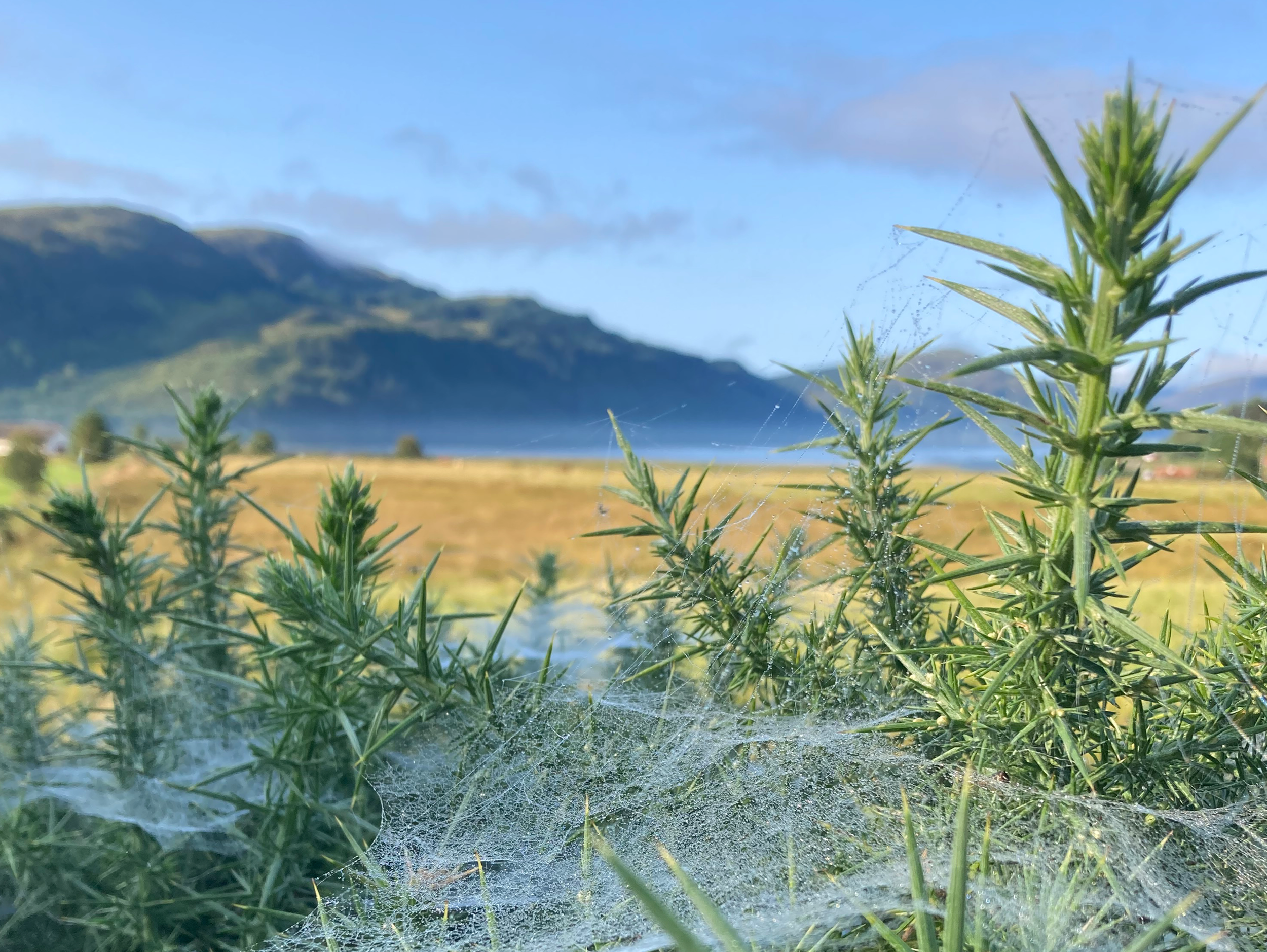
Originally published: University of Dundee Learning Spaces (Tue, 16 May 2023)
The emergence of E-art-h Walking as a methodological and arts-based inquiry with/as place is part of an entanglement of several practices/methods that I have either experienced, trained in, studied or facilitate as a practitioner and teacher. The first element of which is 'Earth Walks', a sensory immersive facilitated walking method from founders of Earth Education (Van Matre, 1990), who have additionally been involved in designing a range of nature-engaging activities, programmes and residential encounters for children and young people with the aim of teaching about and for the Earth. Earth Education practices and approaches were designed in response to the increasing human impacts on biodiversity, ecological systems, global climate and 'nature' with the aim to offer facilitated encounters where the complexity of natural systems could be learnt and understood, nurturing an affect for changing our relationship with Earth, shifting behaviours and wider attitudes that perpetuate crises for Earth's systems.
All methods used in Earth Education are designed with creativity, magic, myth, science, community and wellbeing in mind for outdoor educators to adopt as a practice or include across existing teaching. Earth Walks, are designed for sensory encounter and ‘acclimatisation’ with the Natural World and can include a wide range of activities for all age ranges across multiple places and can be bespoke for both practitioner and participants. Each Earth Walk aims to help all people participating to build a sense of relationship to place through 'sensing/feeling' and 'understanding/learning' with/as nature. The walks include small activities along a planned route that enable participants to 'presence' (Eberhart & Atkins, 2014) with place and sense interconnectedness and interdependence with/as nature. For E-art-h Walking I adopt elements of Earth Walks as part of the 'philosophical journeying' (Styres, 2011; 2017) methodology as it emerges from my own practitioner backgroung; pausing as I walk, choosing a 'magic spot' to listen, smell, touch and observe. I spend time (re)turning to the routes, watching cycles, changes and patterns of place at the Salt Marsh, shoreline, liminal edges and movements across boundaries. I learn by observing patterns while 'presencing' but also by engaging with ecological sciences, sketching, writing poems, journaling auto-ethnographic thoughts through using walks as a philosophical stimulus.
References:
Eberhart, H. and Atkins, S. (2014) ‘Presence and Process in Expressive arts Work: At the Edge of Wonder’. London: Jessica Kingsley Publishers
Hoessle, Kirk. and Van Matre, Steve. (1980) ‘Earthwalks’, Greenville: Institute of Earth Education
Styres, S. (2017) ‘Pathways for Remembering and Recognizing Indigenous Thought in Education: Philosophies of Iethi’nihsténha Ohwentsia’kékha (Land)’, London: University of Toronto Press.
Styres, S. (2011) Land as first teacher: a philosophical journeying, in Reflective Practice, 12(6), pp.717 - 731
Van Matre, Steve. (1990) ‘Earth Education: a new beginning’, Greenville: Institute of Earth Education